Water Heater Elements · From $90
Water heater elements, matched to your tank
Screw-in and bolt-in replacement elements for electric water heaters, matched to your tank's make, wattage and voltage. Send us the model number or a photo of the old element and we will confirm the exact fit before anything ships.
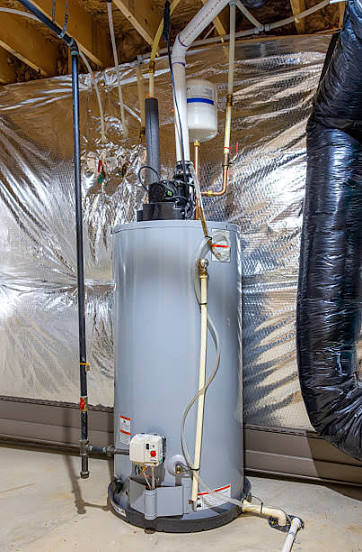
Diagnose first
What the symptoms are telling you
Work out what has actually failed before you order. We would rather talk you out of a part you do not need than sell you the wrong one.
No hot water at all
Usually the upper element. The upper element heats first and controls the sequence, so when it opens, the lower element may never get a call to run.
Do this: Test the upper element for continuity before ordering.
Hot water runs out unusually fast
Usually the lower element. The top of the tank still heats, so you get a normal first draw that turns cold much sooner than it should.
Do this: Test the lower element; the upper is often still fine.
Water is lukewarm but never hot
Often one element running alone, or a thermostat that is out of calibration rather than a dead element.
Do this: Test both elements and check the thermostat setting.
Breaker trips when the heater runs
A shorted element leaking to the tank, or a sheath that has cracked and let water reach the resistance wire.
Do this: Test resistance to ground. Any continuity to the tank means the element is shorted.
Element fails again soon after replacement
Heavy sediment burying the lower element, or the tank being run dry when refilled after service.
Do this: Flush the tank and confirm it is full before restoring power.
Brands we wind for
Matched to your equipment, whoever made it
We wind to factory resistance for these makes. Do not see yours? We wind for almost anything — send the details.
Work it out yourself first
Free tools and guides. We would rather you ordered the right part than ordered twice.
Water Heater questions
How do I know which element failed?
Kill the breaker, pull the access panels and insulation, and put a multimeter across the two element terminals. A working 240V 4500W element reads roughly 10–14 ohms. An infinite or open reading means the element has burned through. Also check from each terminal to the tank body — any continuity there means a shorted element.
Can I put in a higher-wattage element to heat faster?
No. The element wattage has to match what the tank's wiring and breaker were sized for. Fitting a higher-wattage element overloads the circuit and is a genuine fire risk. Match the original wattage and voltage exactly.
What is the difference between screw-in and bolt-in?
Screw-in elements thread into a 1-inch NPT boss and are by far the most common on modern residential tanks. Bolt-in elements seat against a gasket and are held by a four-bolt flange, and turn up on older and some commercial tanks. They are not interchangeable, so the mount style has to be confirmed before ordering.
Should I replace both elements at once?
If the tank is more than a few years old, yes. Both elements have seen the same water and the same duty cycle, so the second one is usually not far behind. You are already draining the tank, so doing both saves a repeat job.
Do I need a special element for hard water?
Hard water and high mineral content shorten copper element life considerably. An Incoloy sheath handles scale and dry-fire far better and is worth the upgrade in most of southern Ontario. Tell us your water conditions and we will recommend the right sheath.
Get a quote
Tell us about your water heater
Model number, a photo of the data plate, or the old element on a tape measure — any of those and we can spec your replacement.