How we build them
Precision winding, done here
Most suppliers in this trade order elements in and put their name on the box. We wind ours. That is not a marketing distinction — it is what lets us control resistance tolerance, wire quality and lead time, and it is why we can make the part when the original is discontinued.
On the floor
This is where your element gets made
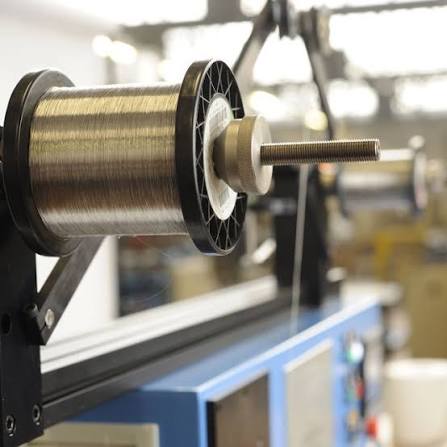
Anyone can claim in-house production. These are the machines.
The process
From your equipment to a wound coil
-
Specification
We work back from your equipment to the electrical spec it needs: target resistance, wire gauge, coil length, stretch and terminal arrangement. If you have a model and serial we use published data. If the part is obsolete, we take dimensions off the old element and derive the spec from the physics.
-
Wire selection
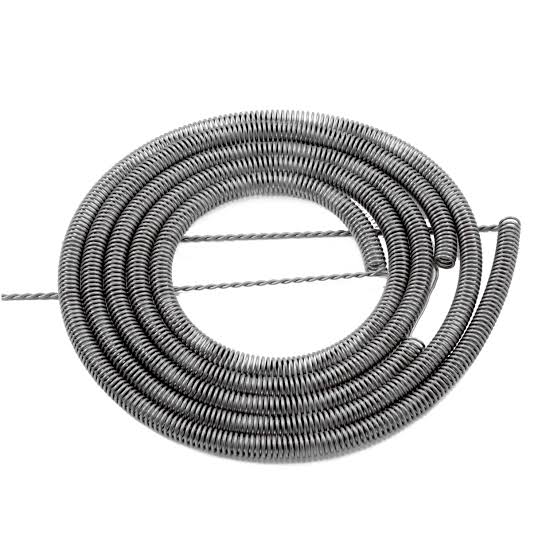
We wind in Kanthal A1 — iron-chromium-aluminium resistance wire sourced from European suppliers — with heavier gauges and alternative alloys available where the duty calls for them. Wire choice sets the ceiling on operating temperature and service life, so it is decided by the job rather than by what happens to be on the shelf.
-
Precision winding
Coils are wound on our own machines. Pitch and stretch are controlled through the run, because a coil that is wound unevenly develops hot spots and fails early at the tight sections — which is the single most common defect in cheap replacement elements.
-
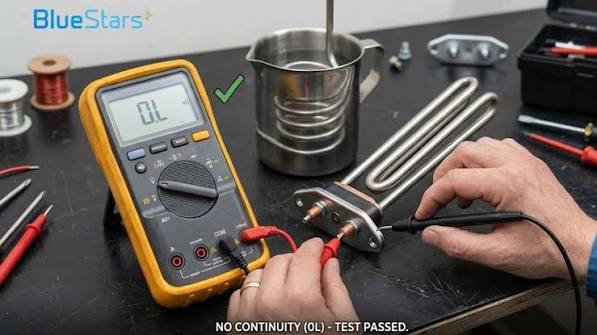
Measurement
Every coil is measured against its target resistance and held to ±2%. Anything outside that does not ship. In multi-element sets this is what keeps the chamber even rather than hot at one ring and cool at another.
-
Dispatch
Standard lead time is 48 hours for most builds, and we tell you up front if yours is an exception rather than after you have committed. Orders ship across North America, with local pickup available in the GTA.
Where it matters most
When the part number no longer exists
Industrial and studio equipment routinely outlives the parts made for it. A kiln from the nineties or a furnace that has run three shifts a day for fifteen years will still be perfectly serviceable long after its element has been discontinued.
Being the manufacturer is what makes that solvable. We do not need a part number in a catalogue — we need dimensions, ratings and a terminal arrangement. From those we can derive the specification and wind a match, which is very often faster and far cheaper than replacing the equipment around it.
-
Work from a sampleSend the old element, or photograph it against a tape measure.
-
Work from a drawingDimensions, ratings and terminal style are enough to start.
-
Single units welcomeOne-off replacements are normal work, not an exception.
-
Confirmed before windingEvery dimension goes back to you in writing first.
About how we build
What does "direct from the manufacturer" actually change for me?
Three things. Tolerance, because we measure what we wind instead of trusting a supplier label. Lead time, because nothing waits on someone else's stock. And technical answers, because the person who works out your spec is the person who winds it — there is no support layer between you and the bench.
Why Kanthal A1 rather than nichrome?
Kanthal A1 is an iron-chromium-aluminium alloy that forms a protective alumina layer at high temperature, which is what lets it survive the repeated heat cycling that kills lesser wire. It also holds a higher maximum operating temperature than common nichrome grades, which matters in kiln and furnace work. Nichrome has its place, mainly at lower temperatures and where a different resistivity is wanted — we will tell you honestly which suits your job.
How do you verify the tolerance you claim?
Every coil is measured against its target resistance before it ships. That is the whole point of holding ±2% — resistance determines heat output, so in a multi-element set, coils that do not match each other produce uneven heat. Measuring each one is what makes the set consistent rather than merely close.
Can you work from a physical sample rather than a drawing?
Yes, and for obsolete parts it is often the best route. Send us the old element, or photograph it against a tape measure with the terminal arrangement clearly visible. We take the dimensions, work back to the electrical specification, and confirm everything in writing before winding.
Do you do one-offs, or is there a minimum order?
One-offs are normal work. A single kiln element or one replacement coil for a furnace that is down is exactly the kind of order we exist to take — it is precisely what larger suppliers will not do economically.
Get a quote
Send us the part you cannot source
A model number, a drawing, or the old element on a tape measure. We will tell you honestly whether we can wind it and what it will take.